A hot shower turning cold is frustrating. Water pooling below a tank, rusty water at the faucet, or a relief valve that will not stop dripping can be much more than an inconvenience. Water heaters work quietly until they do not, and a delayed repair can lead to property damage, higher utility bills, and an unplanned replacement.
For homeowners, landlords, and facility managers, the goal is not always to replace equipment at the first problem. The right decision depends on the heater’s age, condition, fuel source, repair history, and the hot-water demands of the property. A qualified plumber can explain those factors clearly and recommend the practical next step without pressure.
When Water Heaters Need Attention
Most water heaters give some warning before a complete failure. The most obvious sign is inconsistent hot water. If the water does not get as hot as it once did, runs out faster than usual, or changes temperature while a fixture is in use, the issue may be a failing heating element, thermostat, burner component, dip tube, or sediment buildup.
Noises deserve attention as well. Popping, rumbling, or banging from a tank often means mineral sediment has collected at the bottom. This is common in areas with mineral-rich water and becomes more likely as a unit ages. The heater must work harder to warm water through that layer, which can reduce efficiency and put added strain on the tank.
Discolored or rusty hot water can point to internal corrosion, especially when the cold water remains clear. A worn anode rod may be part of the problem, but rust can also indicate that the tank lining is breaking down. Once a tank itself is corroding, repair options are limited.
A leak requires prompt evaluation. Not every drip means the tank has failed. A loose fitting, failing temperature and pressure relief valve, or condensation can sometimes be corrected. Water coming from the bottom seam of a tank is more serious and commonly means the tank has reached the end of its service life. Do not ignore it or try to seal it from the outside. That water can spread quickly through flooring, walls, and lower levels.
For gas units, a pilot that will not stay lit, a burner that does not ignite, or soot around the appliance calls for professional service. If you smell gas, leave the immediate area, avoid switches or open flames, and follow your gas provider’s emergency instructions before arranging repair.
Repair or Replacement: What Makes Sense?
A repair can be the sensible choice when the unit is relatively new and the issue is isolated. Replacing an element, thermostat, ignition component, expansion tank, valve, or anode rod may restore reliable performance at a reasonable cost. Maintenance and smaller repairs often extend the useful life of a properly installed tank water heater.
Replacement becomes the more responsible choice when the tank is leaking, corrosion is widespread, repairs are recurring, or the unit is approaching the end of its expected life. Traditional tank models commonly last around eight to 12 years, though water quality, maintenance, installation quality, and household demand can shorten or extend that range. A unit with a minor part failure at year four is different from one with multiple issues at year 13.
Cost matters, but it should not be the only measure. An older water heater may still produce hot water while using more energy, recovering slowly, or creating a growing leak risk. For a rental property, commercial restroom, office kitchen, or busy household, the cost of lost hot water and emergency disruption can outweigh the savings of one more short-term repair.
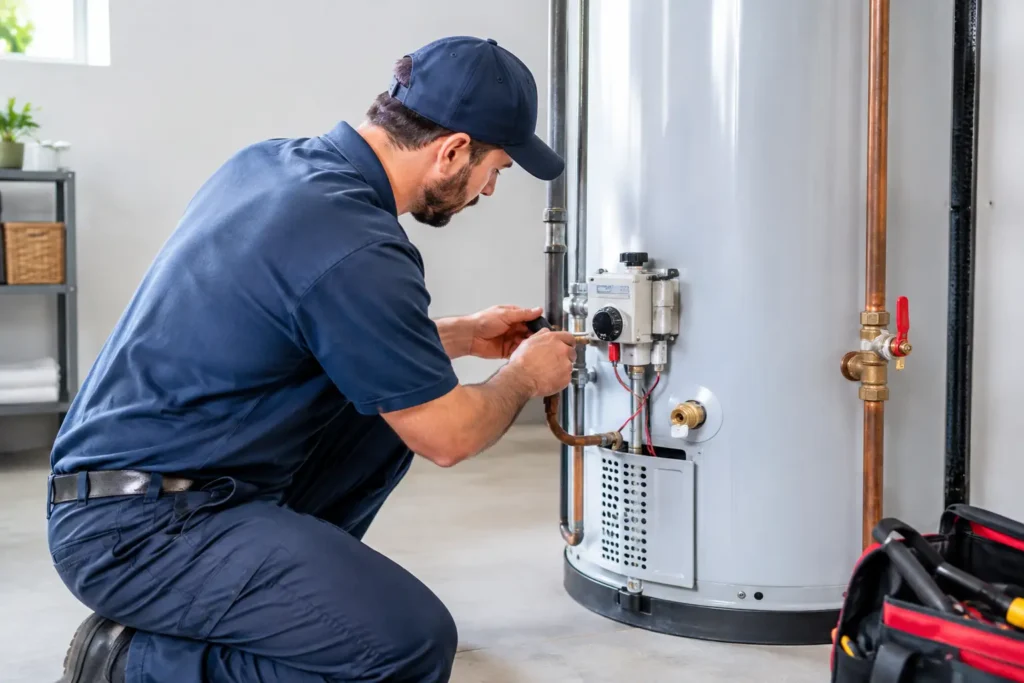
A good recommendation starts with an inspection. The technician should review the tank condition, venting or electrical connections, safety components, capacity, available space, and the property’s actual use. The answer should be based on what is found, not on a one-size-fits-all sales pitch.
Choosing the Right Type and Size
The best replacement is not automatically the largest or most expensive model. It is the one that safely and reliably matches the property.
Tank Water Heaters
Conventional storage-tank water heaters hold a set amount of heated water, often 40, 50, or more gallons. They are familiar, dependable, and generally less expensive to install than tankless models. They can be a strong fit for many homes and smaller commercial spaces, particularly when existing connections and venting support a straightforward replacement.
Sizing is about more than the number of bathrooms. A household with two people who shower at different times has different needs than a family using multiple showers, laundry, and a dishwasher during the same morning rush. A plumber can evaluate first-hour demand, recovery rate, and the appliance’s energy rating to avoid a unit that feels undersized in daily use.
Tankless Water Heaters
Tankless water heaters heat water on demand rather than storing it in a large tank. They can provide a continuous supply when properly sized and may save space. They are especially appealing where a traditional tank is difficult to place or where hot-water use is spread throughout the day.
The trade-off is that tankless installation can require upgrades. Gas models may need a larger gas line, specialized venting, and adequate combustion air. Electric models may require significant electrical capacity. They also need regular descaling in many conditions. A tankless system is an excellent solution for some properties, but it is not a drop-in answer for every existing water heater.
Fuel Source and Efficiency
Gas, electric, hybrid heat-pump, and indirect water heaters each have different requirements. The best choice depends on utility availability, installation space, venting, electrical service, local code requirements, and operating costs. Heat-pump water heaters can be highly efficient but need appropriate surrounding air space and may cool or dehumidify the installation area. Indirect models can work well with certain boiler systems but depend on the condition and output of that equipment.
Before selecting a model, consider whether the property needs faster recovery, lower operating costs, more capacity, or a solution for a tight utility room. Those are different problems, and they do not always call for the same equipment.
Maintenance That Protects Hot Water and Property
Routine care does not make a water heater permanent, but it can improve performance and help reveal trouble early. A professional maintenance visit typically includes checking for leaks and corrosion, testing safety devices, evaluating venting on gas units, inspecting connections, and reviewing overall operation.
Tank flushing may also be appropriate to reduce sediment. The value of flushing depends on the unit’s age and condition. On a newer, well-maintained tank, it can help preserve efficiency. On a neglected older unit with heavy buildup, aggressive flushing can sometimes expose existing weaknesses. That is why the condition of the heater should be evaluated before maintenance is performed.
The anode rod is another overlooked component. It is designed to corrode before the steel tank does. Replacing it at the right time can add life to a tank, but many owners never know it exists until corrosion has already taken hold.
Property owners should also keep the area around the heater accessible and free of storage. Do not block access panels, gas controls, shutoff valves, or the discharge pipe from the temperature and pressure relief valve. That pipe is a critical safety feature and should never be capped or altered.
Act Quickly When a Water Heater Is Leaking
If a water heater is actively leaking, turn off the water supply to the heater if it is safe to do so. For an electric unit, turn off power at the breaker. For a gas unit, avoid adjusting gas controls unless you are familiar with the appliance and do not smell gas. Move valuables away from the area and call for professional help.
For landlords and commercial property managers, a prompt response also protects occupants and limits downtime. A small leak in a utility closet can affect finished spaces, electrical equipment, inventory, or neighboring units. Documenting the issue and arranging service early is usually far less disruptive than waiting for a full tank failure.
Hicks Plumbing Services helps Northern Virginia property owners assess failing water heaters, make practical repair-or-replace decisions, and complete installations with care for the surrounding property. The right service visit should leave you with clear information, safe operation, and a realistic plan for dependable hot water.
Hot water is easy to take for granted until it disappears. Paying attention to early changes in performance gives you more choices, more time to plan, and a better chance to protect the spaces that matter most.