A kitchen sink that drains slowly may seem like a minor inconvenience until the dishwasher runs and murky water rises into the basin. A shower that holds water around your ankles or a restroom drain backing up at a business can disrupt much more than a routine. Timely drain cleaning restores normal flow, but it can also help prevent the water damage, odors, and property disruption that follow a full backup.
Not every slow drain needs the same solution. A small buildup near a fixture is different from a blockage deep in a main sewer line, and treating both problems the same can waste time or make the situation worse. The right approach starts with identifying where the obstruction is and what is causing it.
When Drain Cleaning Is More Than a Simple Clog
One slow bathroom sink may be dealing with hair, soap residue, toothpaste, or a small object caught near the stopper. That is often a localized problem. When several fixtures drain slowly at once, however, the concern may be farther down the line.
Homeowners and property managers should pay attention when toilets bubble while a sink drains, water appears in a shower or floor drain after flushing, or a washing machine causes water to back up elsewhere. These signs can point to a restriction in a branch line or the main sewer line. Wastewater should never be ignored when it enters a living area, commercial space, or utility room. It can create sanitation concerns and damage flooring, walls, inventory, and finishes.
Recurring clogs also deserve a closer look. Clearing the same drain every few weeks does not solve the underlying problem. Grease buildup, heavy scale, damaged piping, tree-root intrusion, poor pipe slope, or an older line nearing failure can all create repeated drainage trouble.
Warning Signs That Need Prompt Attention
A bad odor from a drain, gurgling sounds, water draining more slowly over time, and frequent plunging are early warnings. If sewage backs up, water is overflowing, or a drain problem affects multiple fixtures, it is time to stop using water where possible and arrange professional help. Reducing water use can limit the amount of wastewater that reaches the blockage and lowers the risk of a larger backup.
For businesses, speed matters even more. A blocked restroom, kitchen drain, mop sink, or floor drain can affect employees, tenants, customers, and daily operations. Addressing the issue early is usually less disruptive than waiting for an emergency closure or cleanup.
What Professional Drain Cleaning Can Address
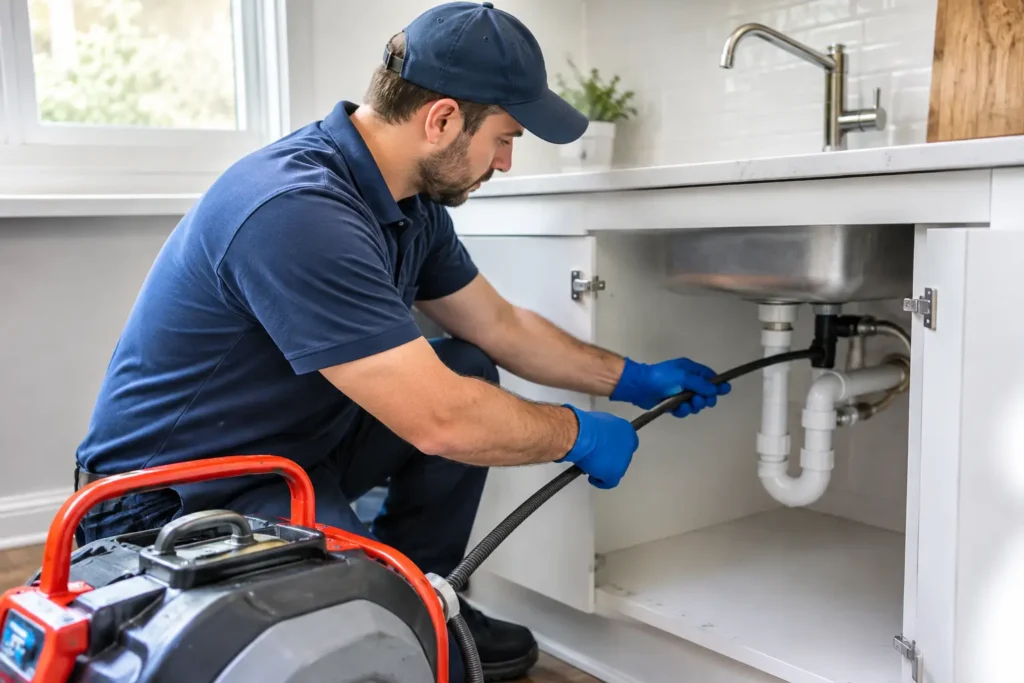
Professional service is not just about forcing water through a pipe. A trained technician evaluates the symptoms, accesses the appropriate cleanout or fixture, and uses equipment suited to the blockage and the pipe condition.
Mechanical drain machines can cut through or retrieve many common obstructions, including hair, soap buildup, paper products, and compacted debris. For grease and residue along pipe walls, hydro jetting may be recommended when the line is a suitable candidate. This process uses controlled high-pressure water to scour buildup from the interior of the pipe rather than merely opening a narrow path through it.
The best method depends on the plumbing system. Older pipes, damaged lines, and certain materials may need a more cautious approach. That is why a responsible recommendation should account for the age and condition of the line rather than treating high-pressure cleaning as the answer to every clog.
When the cause is not clear, a sewer camera inspection can provide useful answers. It may reveal roots entering the line, a separated fitting, a sag that collects waste, or a damaged section of pipe. Seeing the issue helps distinguish between a blockage that can be cleaned and a pipe that needs repair or replacement.
Why Store-Bought Drain Cleaners Can Create Bigger Problems
Chemical drain cleaners promise a quick fix, but they are not a dependable answer for a serious clog. Many products generate heat or use harsh ingredients that can be hard on certain pipes, seals, and fixtures. They can also leave corrosive liquid sitting in the drain when the clog remains, creating a hazard for anyone who later tries to clear the line.
A plunger can be useful for a minor toilet or sink stoppage, especially when used carefully. Removing hair from a bathroom stopper can also improve drainage. But repeated plunging, chemical products, or improvised tools should not replace a proper diagnosis when the problem keeps returning.
Avoid pushing wire hangers or sharp objects into a drain. These can scratch fixtures, damage piping, or drive the blockage deeper. Never flush wipes, even those labeled flushable, paper towels, feminine hygiene products, or excess food waste. Garbage disposals are helpful appliances, but they are not designed to process grease, fibrous vegetables, coffee grounds, or large amounts of food.
Keeping Household Drains Clear Between Service Visits
Daily habits have a direct effect on how long drains stay open. In the kitchen, collect cooking grease in a container and dispose of it in the trash after it cools. Use a sink strainer to catch food particles, and run cold water before, during, and after using a garbage disposal.
In bathrooms, use hair catchers in showers and tubs, clear them regularly, and keep soap-heavy products from accumulating around stoppers. Toilet paper belongs in the toilet, but other paper products do not. If children or guests are unfamiliar with the plumbing, a simple covered trash can near the toilet can prevent many avoidable clogs.
For older homes, preventive maintenance can be especially valuable. Northern Virginia properties often have plumbing systems of different ages and materials, and mature trees can affect buried sewer lines over time. A maintenance plan based on the condition and history of the system can help owners address buildup before it becomes an after-hours emergency.
Drain Problems in Rental and Commercial Properties
Landlords and facility managers face a different challenge: one drain problem can affect several people and create disputes about access, downtime, and responsibility. Clear communication helps. Record where the backup occurred, which fixtures are affected, when it began, and whether the issue has happened before. This information gives the technician a better starting point and can reduce the time needed to locate the trouble.
Commercial drain cleaning also requires attention to how the property operates. A restaurant or break-room sink may collect grease and food debris. A salon may have hair and product buildup. An office restroom can experience blockages from high use or improper items being flushed. The right service plan should consider the property’s actual use, not just the size of the pipe.
Hicks Plumbing Services brings more than 30 years of local plumbing experience to drain and sewer problems in Northern Virginia. Licensed and insured technicians can explain what they find in plain language, recommend the appropriate next step, and treat the work area with care from arrival through cleanup.
When Cleaning Is Not Enough
A cleared drain is good news, but it is not always the end of the repair. If a camera inspection shows broken piping, roots, a collapsed section, or a persistent low spot in the sewer line, cleaning may restore flow only temporarily. In that situation, repairing the damaged section can be the more practical long-term choice.
This is where transparent guidance matters. Property owners should understand whether the line has a buildup issue that can be maintained, a one-time obstruction, or a structural problem that needs a larger repair. No one benefits from repeated service calls when the real cause has already been identified.
A drain rarely chooses a convenient time to stop working. Paying attention to early symptoms, avoiding harsh shortcuts, and getting a recurring problem properly evaluated can protect the plumbing system and the space around it. When water is moving the wrong direction, prompt action gives you the best chance to keep a frustrating clog from becoming a damaging backup.