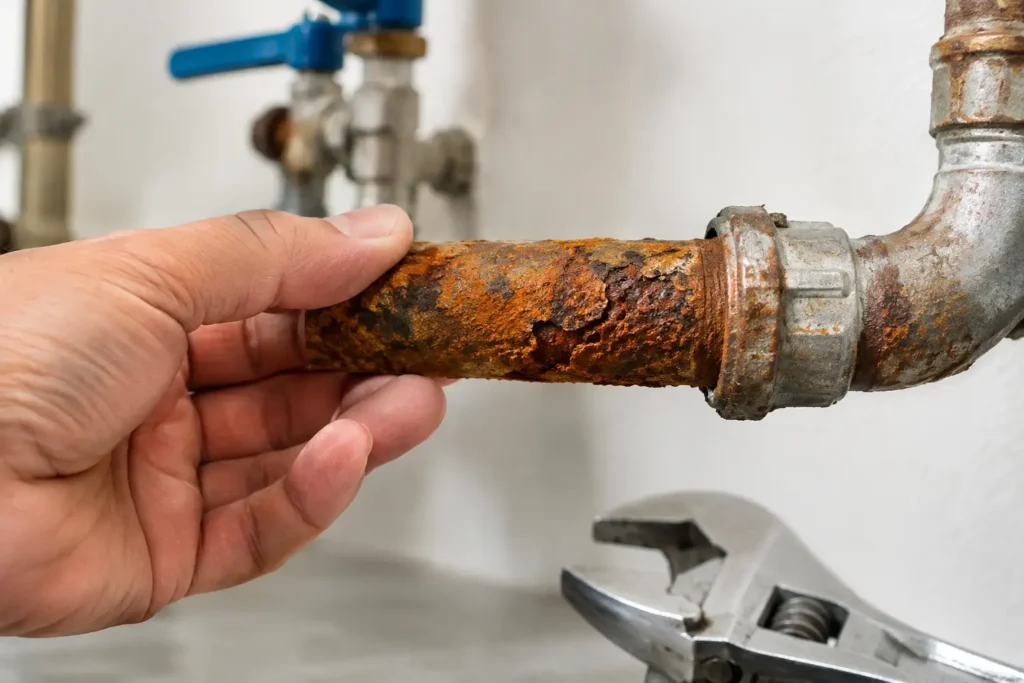
A pinhole leak behind a cabinet or a rusty stain beneath a pipe rarely starts as a sudden failure. It is often the last visible result of corrosion that has been developing for months or years. Understanding the top causes of pipe corrosion can help homeowners, landlords, and facility managers address small warning signs before water damages finishes, disrupts operations, or turns into an emergency repair.
Corrosion is the gradual breakdown of metal caused by water, oxygen, minerals, soil, or contact with other metals. It can affect water lines, drain piping, fittings, valves, water heater connections, and underground pipes. The right repair depends on why the corrosion started, how much pipe has been affected, and whether the system is nearing the end of its useful life.
Top Causes of Pipe Corrosion
Water chemistry and mineral content
The water moving through your plumbing has a major influence on pipe condition. Water that is unusually acidic can gradually wear away the inside of copper and galvanized pipes. Highly alkaline water can create mineral scale that restricts flow and contributes to localized corrosion beneath deposits.
Northern Virginia properties can have different water conditions depending on the water source, treatment, and plumbing history. A metallic taste, blue-green staining near copper fixtures, or repeated pinhole leaks may point to a water chemistry issue. Testing the water can be useful, but it should be considered alongside the age and material of the piping. A water treatment system may reduce future damage in some situations, but it cannot restore pipe walls that have already become thin.
Oxygen exposure and standing water
Metal pipes corrode more readily when water and oxygen remain in contact with the same area for long periods. This is common in rarely used guest bathrooms, vacant rental units, seasonal buildings, and dead-end pipe runs with very little water movement.
Standing water is also a concern outside the pipe. A slow drain leak, a damp crawlspace, or a hidden plumbing leak can keep the exterior of a pipe wet. Rust on a steel or galvanized pipe may begin from the outside, while the inside still appears relatively clear. Finding and correcting the moisture source matters as much as replacing the visibly damaged section.
Dissimilar metals connected together
When two different metals are connected in a plumbing system, an electrochemical reaction called galvanic corrosion can occur. Copper connected directly to galvanized steel is a common example. In the presence of water, one metal can corrode faster than it normally would.
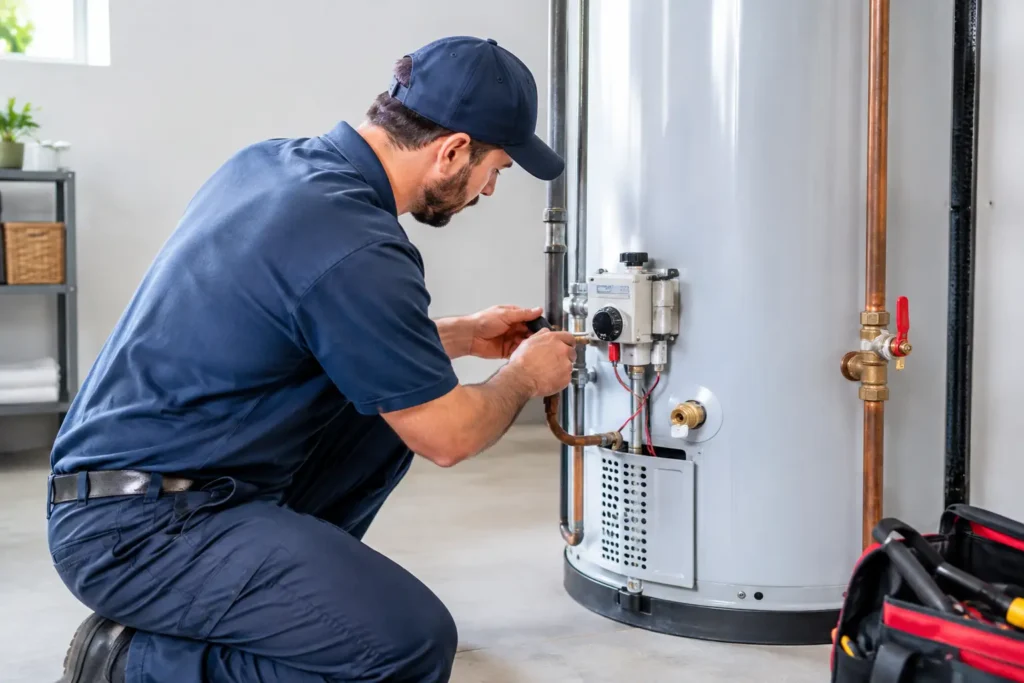
This problem often appears around fittings, transitions, water heater connections, and repairs made at different times over the life of the building. Proper dielectric unions, approved transition fittings, and correct installation methods help separate incompatible metals. The trade-off is that a fitting replacement may solve the immediate connection issue without addressing corrosion farther along an older pipe run.
Aging galvanized steel pipes
Many older properties still have galvanized steel supply pipes. These pipes were widely used for decades, but their zinc coating eventually breaks down. Once that happens, rust and mineral buildup can form inside the pipe, reducing water flow and affecting water quality.
Symptoms often include weak pressure at several fixtures, brown or reddish water after a faucet has not been used, and recurring leaks at threaded joints. A single repair can buy time if the rest of the system remains sound. However, repeated failures in multiple locations usually make a planned repipe more practical than continuing with isolated patches.
Copper pitting and internal wear
Copper is durable, but it is not immune to corrosion. Pitting corrosion creates tiny holes in the pipe wall, sometimes so small that a leak begins as a faint green stain or a few drops of water. It can be influenced by water chemistry, excess oxygen, installation conditions, electrical grounding issues, or debris inside the line.
Because the damage is often internal, a pipe may look normal until it leaks. If pinhole leaks keep appearing in different sections of copper piping, replacing only the latest failed piece may not be the best long-term answer. A professional evaluation can identify whether the issue is limited to one location or reflects wider wear throughout the system.
High water velocity and pressure
Water moving too quickly through undersized piping, tight bends, or partially blocked lines can wear away the inside surface over time. This is called erosion corrosion. It is more likely near elbows, tees, valves, and other areas where water changes direction.
Excessive water pressure adds stress to the entire plumbing system, including pipe joints, appliance hoses, and fixtures. It does not always cause corrosion on its own, but it can speed up failure in pipe walls that are already thinning. A pressure regulator and expansion tank, when needed, can protect the system from repeated pressure spikes.
Poor installation or unsupported piping
Pipes need secure support and enough room to expand and contract as hot and cold water move through them. Improper support can leave pipes rubbing against framing, vibrating, or holding water in unintended low spots. Damaged protective coatings, stressed fittings, and repeated movement can all create conditions where corrosion starts.
Installation quality also matters at joints. Excess flux, poorly cleaned connections, or unsuitable fittings can contribute to corrosion in specific areas. If a leak occurs near a fitting shortly after a renovation or replacement, the cause may be related to that connection rather than the age of the entire plumbing system.
Corrosive soil around buried pipes
Underground water and sewer lines face a different environment from indoor plumbing. Soil moisture, acidity, salt content, stray electrical current, and poor drainage can deteriorate metal piping from the outside. Cast iron sewer lines can rust and develop rough interior surfaces, while older metal water lines may thin below grade without obvious signs inside the building.
Slow drains, recurring backups, wet patches in the yard, unusual water bills, or a drop in water pressure can point to an underground issue. Camera inspections and leak detection can help locate the problem without guessing or unnecessarily excavating a large area.
Warning Signs You Should Not Ignore
Corrosion does not always announce itself with a burst pipe. Watch for discolored water, metallic-tasting water, green or blue staining around copper fittings, rust flakes, white mineral buildup, damp spots near pipe joints, and musty odors inside cabinets or utility rooms.
Changes in water pressure also deserve attention. If one fixture has low flow, the issue may be a clogged aerator or a localized valve problem. If several fixtures have lower pressure, corroded supply piping or a larger water-line concern becomes more likely. For commercial properties, unexplained water use or recurring restroom and kitchen repairs can signal deterioration that is affecting more than one branch line.
How to Limit Corrosion and Avoid Surprise Leaks
There is no single prevention plan that fits every property. The age of the building, pipe material, water conditions, and history of repairs all matter. Still, regular inspections give you the best chance to catch problems while repairs are manageable.
Check exposed pipes around water heaters, under sinks, in mechanical rooms, and in basements for staining or moisture. Repair small leaks promptly, keep crawlspaces and utility areas as dry as possible, and have unusually high or low water pressure evaluated. If your home has older galvanized, cast iron, or frequently repaired copper piping, ask for a clear assessment of remaining pipe condition instead of relying on a temporary repair each time.
For a suspected active leak, shut off the nearest fixture valve if possible. If water is spreading or the source cannot be isolated, turn off the main water supply and arrange for prompt service. Waiting can allow a pinhole leak to damage drywall, flooring, insulation, electrical components, or neighboring units.
Hicks Plumbing Services can evaluate visible corrosion, recurring leaks, and aging piping with straightforward recommendations based on the condition of your system. Whether the appropriate next step is a targeted repair, water-pressure adjustment, or a larger replacement plan, clear answers help you protect the property without paying for work you do not need.
A corroded pipe does not always require a full repipe, but it does require attention. Addressing the first signs of trouble gives you more choices, more control over timing, and a better chance of keeping water where it belongs.