A water heater rarely chooses a convenient time to fail. One day the shower runs cold, a puddle appears near the tank, or rusty water starts coming from the hot side of the faucet. When that happens, the water heater replacement cost matters, but so does getting clear answers before a small leak becomes property damage.
For Northern Virginia homeowners, landlords, and property managers, replacement pricing depends on more than the new unit’s sticker price. The type of heater, fuel source, venting, permit requirements, condition of existing plumbing, and access to the installation area can all affect the final scope of work. A reliable estimate should explain those factors plainly, not leave you guessing after the work begins.
What Does Water Heater Replacement Cost Include?
A complete replacement involves removing the old heater, installing the new equipment, connecting water and fuel or electrical lines, testing operation, and hauling away the old unit. In many cases, it also includes bringing nearby components up to current code requirements.
For a standard tank-style replacement where the existing setup is in good condition, the total cost is generally more predictable. Costs rise when an older home needs changes to gas piping, electrical service, venting, drain connections, shutoff valves, expansion tanks, or the water heater pan. These are not unnecessary add-ons. They are often required for safe operation, code compliance, and protection against future leaks.
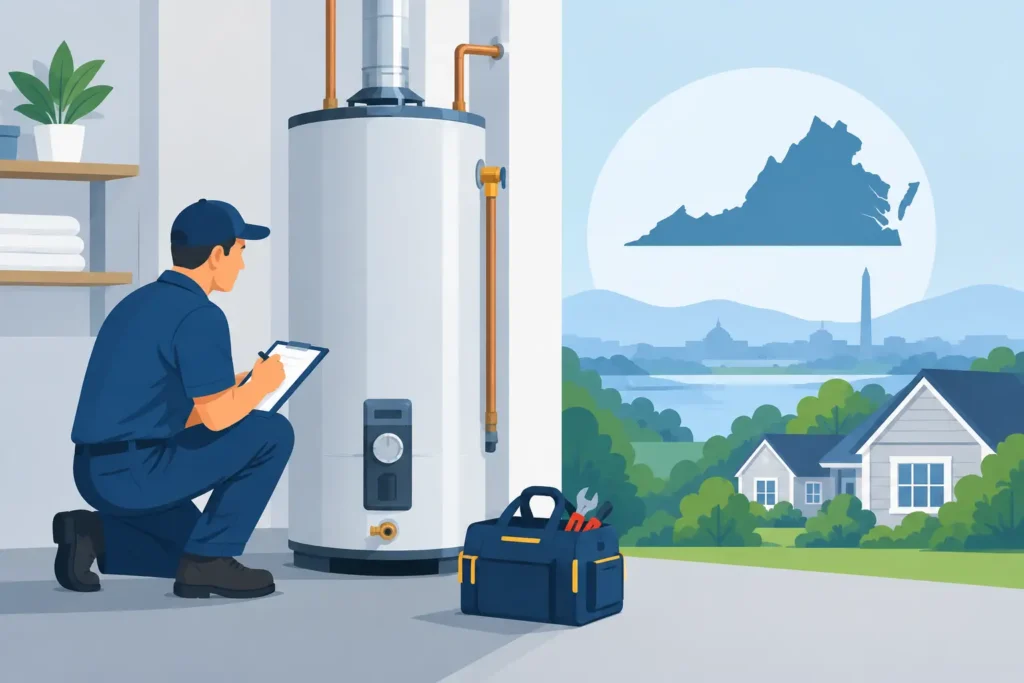
In Northern Virginia, permits and inspections may also be part of the project, depending on the jurisdiction and the type of installation. Fairfax County, Arlington, Alexandria, and other local areas can have different requirements. An experienced local plumber can identify what applies to your property before installation day.
Typical Water Heater Replacement Cost Ranges
A basic electric or natural gas tank water heater replacement commonly costs less than a tankless installation because the equipment and labor are more straightforward. A standard replacement may fall in the low-to-mid thousands when the existing connections, venting, and location can be reused. Larger-capacity units, high-efficiency models, and projects with code upgrades can move the investment higher.
Tankless water heaters usually cost more upfront. They can be an excellent fit for households that want extended hot-water availability, have limited mechanical-room space, or are replacing an aging system as part of a larger renovation. However, they may require a larger gas line, a new dedicated electrical circuit, updated venting, or other changes that are not necessary with a conventional tank.
Heat pump water heaters can also have a higher initial cost than traditional electric tanks. They use less energy in the right setting, but they need sufficient space and can cool the surrounding area. They are often best suited to garages, basements, or utility rooms rather than tight interior closets.
The lowest initial price is not always the best value. A heater that is too small can leave a family without enough hot water during busy mornings. One that is oversized may cost more to purchase and operate than necessary. The right choice depends on household size, bathing habits, appliance use, available fuel, and the condition of the existing system.
The type and capacity of the unit
Traditional storage-tank water heaters are available in several sizes, often from 30 to 75 gallons or more. A household with one or two occupants may have different needs than a home with several bathrooms, a large soaking tub, and back-to-back showers. Gas heaters typically recover hot water faster than comparable electric models, but the best option depends on the home’s existing utility setup.
Tankless systems are rated by flow rate rather than tank capacity. Their performance is affected by incoming water temperature and simultaneous demand. In winter, when incoming water is colder, a unit may produce less hot water at a given flow rate. Proper sizing is one reason a professional assessment is valuable.
Fuel source and efficiency
Replacing a gas unit with another gas unit is often simpler than switching to electric, and the same is true in reverse. Fuel conversions can require new wiring, service-panel capacity, piping, venting, or utility coordination. Those changes affect both cost and project timing.
High-efficiency equipment can reduce operating expenses, but it may use different vent materials or condensate drainage. Ask about expected maintenance, warranty coverage, and whether the savings make sense for how long you expect to own or manage the property.
Installation access and existing conditions
A heater in an open basement utility room is generally easier to replace than one in a finished closet, attic, crawl space, or confined mechanical room. Tight access may require extra labor to remove the old unit safely and bring in the new one without damaging walls, flooring, or stairs.
Corroded valves, aging supply lines, improper venting, or a missing drain pan can also change the scope. A careful technician should point out these conditions, explain why they matter, and distinguish between required corrections and optional improvements.
When Repair Makes More Sense Than Replacement
Not every water heater problem calls for a new unit. A failed heating element, thermostat, pilot assembly, igniter, or pressure-relief valve may be repairable, particularly on a newer heater that has otherwise been maintained well.
Replacement becomes more practical when the tank itself is leaking, the unit is near or past its expected service life, repairs are becoming frequent, or corrosion is visible around the tank and connections. Most tank water heaters last roughly eight to 12 years, although water quality, installation quality, maintenance, and usage all play a role. A leaking tank cannot be reliably repaired and should be addressed promptly.
For landlords and commercial property owners, the decision also includes downtime. Repeated repairs may cost less in the moment but can create tenant frustration, disrupt operations, and increase the risk of water damage. A straightforward replacement plan can be the more responsible long-term choice.
How to Compare Replacement Estimates Fairly
When comparing estimates, make sure each one covers the same scope of work. A lower number may exclude permit handling, disposal, code-required safety items, or modifications needed to complete the installation correctly.
Ask whether the estimate includes the unit model and capacity, labor, removal and disposal, permit costs if applicable, expansion tank requirements, pan and drain work, venting changes, and any electrical or gas-line upgrades. You should also know who will handle the inspection if one is required.
A good contractor will explain the differences between options without pushing the most expensive model. Hicks Plumbing Services approaches water heater decisions by looking at the property, hot-water demand, existing connections, and budget, then providing practical recommendations based on the actual conditions.
Planning Ahead Can Protect Your Property
If your water heater is more than eight years old, check it periodically for moisture around the base, rust, unusual noises, inconsistent temperatures, or discolored hot water. Keep the area around it clear, and make sure everyone responsible for the property knows where the water shutoff is located.
For a heater that is actively leaking, turn off the water supply to the unit if it is safe to do so and contact a qualified plumber promptly. Do not wait for a slow leak to become a flooded basement, damaged ceiling, or interruption to your business.
The best time to discuss replacement options is often before the tank fails completely. A clear assessment gives you time to choose the right system, understand the full installation scope, and schedule work around your household, tenants, or business operations.