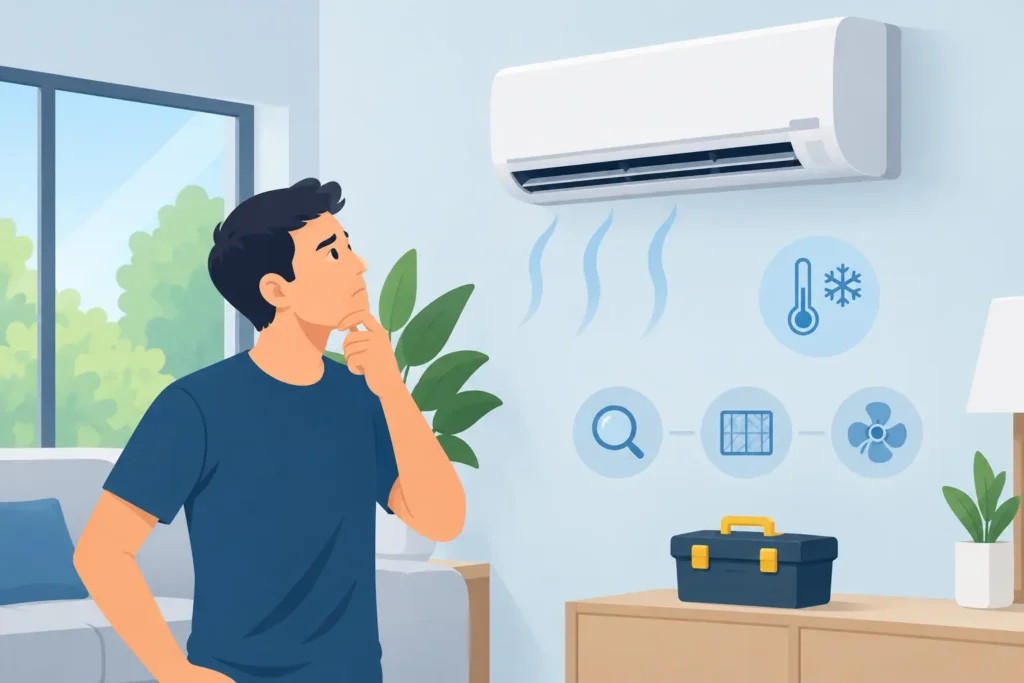
When an air conditioner not cooling turns a Northern Virginia home, office, or rental property uncomfortable, the cause is not always a major equipment failure. A clogged filter, incorrect thermostat setting, tripped breaker, or blocked outdoor unit can all reduce cooling. Other problems, including refrigerant leaks and failing electrical parts, need professional attention before they create a larger repair.
The right next step depends on what the system is doing. A unit that runs but blows warm air calls for a different response than one that will not turn on at all. Start with a few safe checks, then know when it is time to schedule an HVAC technician.
Air Conditioner Not Cooling? Check These First
Before resetting breakers repeatedly or taking panels off your equipment, check the thermostat. Set the system to Cool and choose a temperature several degrees below the current indoor temperature. Make sure the fan setting is on Auto rather than On. When the fan is set to On, it can keep circulating air between cooling cycles, which may feel warmer even when the equipment is operating normally.
If the thermostat uses batteries, replace them. A weak battery or thermostat issue can prevent the system from calling for cooling properly. Also check that windows and exterior doors are closed. In older homes, a door left open or major air leaks around windows can make a properly operating system appear inadequate during a hot afternoon.
Next, inspect the air filter. A heavily clogged filter restricts airflow, forces the system to work harder, and can contribute to a frozen indoor coil. If the filter looks gray, packed with dust, or has not been changed in several months, install the correct replacement. Do not run your system without a filter, even for a short time. That can allow debris into the equipment and create more trouble.
At the electrical panel, look for a tripped breaker labeled HVAC, AC, air handler, or furnace. You can reset a breaker once by moving it fully to Off and then back to On. If it trips again, stop there. A repeatedly tripping breaker can point to an electrical fault, a failing component, or a problem within the outdoor unit. It needs diagnosis, not repeated resets.
Look at the Outdoor Unit Safely
Your outdoor condenser releases the heat removed from inside the building. It needs clear space around it to do that job. With the system off, remove leaves, grass clippings, branches, and other loose debris around the unit. Keep plants and stored items at least a couple of feet away so air can move freely through the coil.
Do not spray the equipment with a pressure washer, bend the coil fins, or open electrical panels. A gentle rinse from a standard garden hose can help remove light surface dirt if the power is off, but a coil covered in thick grime generally needs professional cleaning. Northern Virginia pollen, landscaping debris, and cottonwood can build up quickly during the cooling season.
Listen for unusual sounds as well. Loud buzzing, grinding, clicking, or a persistent humming noise may mean the outdoor unit is trying to start but cannot. If you hear these sounds, smell something burning, or see smoke, turn the thermostat off and shut off power at the breaker if it is safe to do so. Request service promptly.
Why Your AC Runs but Does Not Cool
A system that runs continuously without bringing down the temperature can have several causes. The simplest is airflow. A dirty filter, blocked supply vents, closed return vents, or a blower problem can keep cooled air from reaching rooms effectively. Keep supply registers open and make sure furniture, curtains, or rugs are not blocking returns.
Frozen evaporator coils are another common issue. Signs include weak airflow, ice on the refrigerant line near the indoor equipment, or water around the air handler after ice begins to melt. Ice can result from restricted airflow, low refrigerant, or a mechanical issue. Turn cooling off, set the fan to Auto, and let the system thaw. Do not chip or scrape the ice. Then arrange a professional inspection before restarting cooling.
Low refrigerant is often misunderstood. Air conditioners do not use up refrigerant during normal operation. If the charge is low, there is usually a leak that must be found and repaired. Adding refrigerant without addressing the leak may restore cooling briefly, but it does not solve the underlying problem. A technician should test the system, identify the source, discuss repair options, and verify proper performance afterward.
A failed capacitor, contactor, compressor, fan motor, or control board can also leave an AC unit running poorly or blowing warm air. These components involve high voltage and should be handled by a trained HVAC professional. The repair may be straightforward, but proper testing matters. Replacing a part based only on a symptom can waste time and money.
Uneven Cooling Is a Different Kind of Problem
If some rooms are comfortable while others stay hot, the central equipment may not be the only issue. Upstairs bedrooms, sun-facing rooms, additions, and rooms over garages often have higher heat gain. Duct leaks, undersized or poorly balanced ductwork, inadequate return air, and insulation gaps can all affect comfort.
Start by confirming that vents are open and unblocked. Then consider when the problem occurs. If a room is hot only in the late afternoon, window exposure and insulation may be major factors. If it is hot all day, airflow or duct design may be more likely. For commercial spaces, changed layouts, added equipment, or more occupants can increase cooling demand beyond what the original system was designed to handle.
A qualified technician can determine whether the issue is equipment performance, airflow, controls, or the building itself. That distinction is valuable because replacing an air conditioner will not fix a ductwork problem, and a duct adjustment will not correct a failing compressor.
When to Call for HVAC Repair
Schedule service when basic checks do not restore cooling, especially if the system is blowing warm air, freezing up, leaking water, cycling on and off rapidly, or making unusual noises. Do not wait through days of poor performance. An air conditioner working under strain can cause higher electric bills and may place additional stress on major components.
For landlords and facility managers, quick action can also protect tenants, employees, customers, and temperature-sensitive spaces. Document the symptoms, note whether the unit is running, and share when the issue began. Details such as recent breaker trips, thermostat messages, ice, or water leaks can help the technician narrow down the problem efficiently.
If water is leaking near electrical equipment, or the system has a burning odor, treat it as urgent. Shut the system down and keep people clear of the affected area until it can be evaluated. Comfort matters, but safety comes first.
Prevent the Next Cooling Breakdown
Most cooling failures do not offer much warning, but regular maintenance reduces the odds of an unexpected outage. Change filters on a schedule that fits your household, pets, occupancy, and filter type. Keep the outdoor unit clear throughout spring and summer. Pay attention to small changes, such as longer cooling cycles, weaker airflow, new noises, or rooms that become harder to cool.
Seasonal professional maintenance adds another layer of protection. A technician can check electrical connections, drain components, refrigerant performance, motors, coils, and overall operation before peak summer heat arrives. Maintenance cannot guarantee that every part will last forever, but it can catch developing problems when repair choices are usually less disruptive.
Hicks Plumbing Services brings more than 30 years of local mechanical-service experience to HVAC concerns across Northern Virginia. You should receive a clear explanation of what is wrong, what repair is recommended, and what options make sense for your property, without pressure.
A hot house or workplace is frustrating, especially when the system appears to be running. Start with the safe checks, avoid temporary fixes that can damage equipment, and get qualified help when the problem persists. Prompt, informed service can restore comfort while helping protect the system you rely on all summer.