No hot water can turn an ordinary morning into a problem quickly. If you searched for how to reset water heater controls after a cold shower, start by identifying the type of unit you have. An electric tank water heater may have a reset button. A gas water heater and a tankless model follow different restart procedures, and pressing buttons without addressing the cause can create a larger repair.
A reset can restore hot water when a safety control trips once. It is not a repair for a recurring problem, a leaking tank, a burning smell, or a gas-related concern. The goal is to get the system running safely while recognizing when it needs professional attention.
First, Identify Your Water Heater
Look for a label on the side of the tank or front of the unit. An electric water heater has electrical wiring entering through a junction box near the top and does not have a gas line, vent pipe, or burner assembly. Most electric tank models have a high-limit reset button behind an upper access panel.
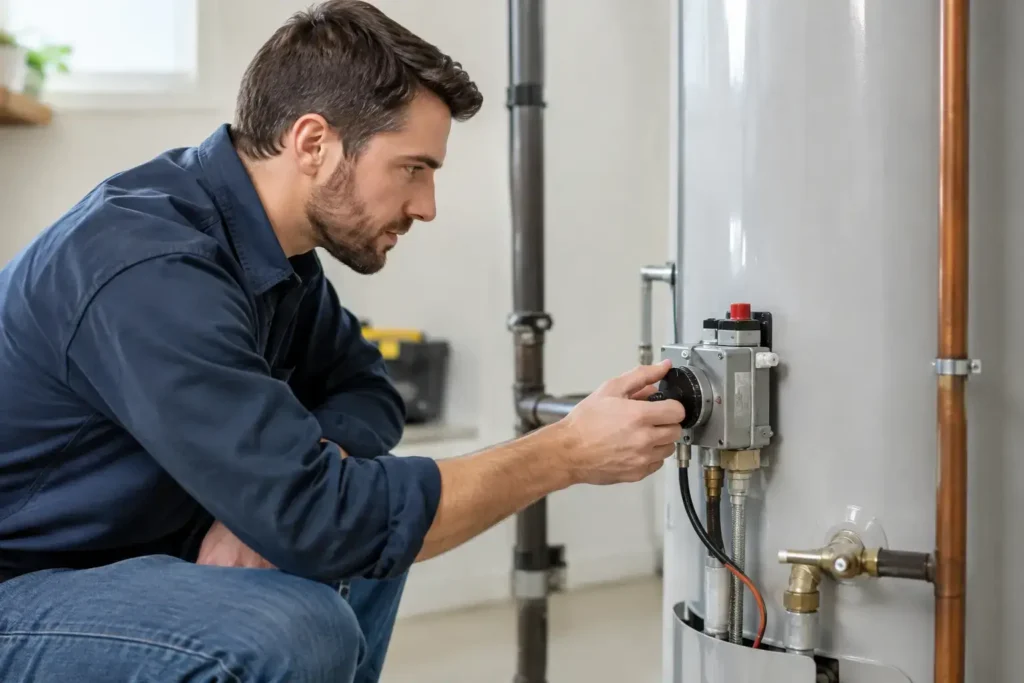
A gas tank water heater has a gas supply line, a control valve near the bottom, and a vent pipe leading upward. It may use a standing pilot or electronic ignition. There usually is no red reset button behind an access panel on a gas water heater.
Tankless water heaters, whether gas or electric, have a display panel that may show an error code. Resetting one often means turning power off briefly, then restoring it. That can clear a temporary fault, but the error code is still valuable information if the issue returns.
Before you touch the unit, stop and call for service if you notice a puddle around the tank, active dripping from fittings, a strong gas smell, scorch marks, smoke, or a melted electrical cover. Do not reset a water heater that appears damaged.
How to Reset a Water Heater Safely
For a standard electric tank water heater, the reset button is part of the upper thermostat assembly. It is a safety device, sometimes called the high-limit switch or emergency cut-off. It trips when the water temperature becomes too high or when an electrical issue affects the thermostat.
Start by turning off power at the water heater’s dedicated circuit breaker. Do not rely only on the thermostat dial or switch at the heater. Electricity and water are a dangerous combination, so the breaker needs to be off before you remove the access cover.
Once power is off, remove the upper access panel using a screwdriver. Behind it, gently fold insulation away from the thermostat assembly. You should see a small red button. Press it firmly once. If it clicks, the safety switch had tripped. If it does not click, it may already be reset, or the problem may be elsewhere.
Put the insulation back in place, reinstall the access panel, and turn the breaker on. Give the heater at least 30 to 60 minutes to begin warming water. A full tank may take two to four hours to recover, depending on its size, starting water temperature, and the condition of the heating elements.
Do not leave the panel off while the heater operates. The insulation and cover help protect the thermostat and wiring from accidental contact and moisture.
Check the Temperature Setting
While the access panel is open and the power is off, look at the thermostat setting. Many homes are best served by a setting around 120 degrees Fahrenheit. Higher settings increase scalding risk and make the heater work harder. If the thermostat is set unusually high, lowering it may help prevent another high-limit trip.
On many electric units, there are upper and lower thermostats. They should generally be set to the same temperature. Adjusting them unevenly can create inconsistent water temperatures and may make troubleshooting harder.
Why an Electric Water Heater Reset Button Trips
A single trip may occur after a power interruption or an isolated thermostat issue. But a reset button that trips again is a warning, not an inconvenience to work around. Repeatedly resetting it can allow overheating or electrical damage to continue.
Common causes include a failing thermostat, a stuck heating element, loose or damaged wiring, sediment buildup, or a breaker and circuit issue. Older tanks are more likely to develop multiple problems at once. In Northern Virginia, mineral sediment can also collect in tank-style heaters over time, reducing efficiency and contributing to overheating concerns.
If the breaker trips when you restore power, leave it off. A tripping breaker can point to a shorted heating element or damaged wiring. That is not a safe do-it-yourself reset situation.
Resetting a Gas Water Heater Is Different
Gas water heaters do not use the same high-limit reset button found on electric models. If the pilot is out, follow the lighting instructions printed on the unit exactly. These instructions vary by manufacturer and ignition type.
If you smell gas, do not attempt to light the pilot, use a switch, or operate appliances nearby. Leave the area, avoid creating a spark, and contact the gas utility or emergency services from a safe location. After the immediate hazard is handled, a qualified technician can inspect the water heater.
If there is no gas smell but the water heater will not stay lit, the cause could be a dirty burner, failed thermocouple or flame sensor, venting issue, gas control problem, or insufficient combustion air. Restarting the unit may provide a clue, but it will not correct a failed safety component.
What to Do With a Tankless Water Heater
For a tankless water heater, write down any error code before resetting the unit. That code can identify issues such as ignition failure, blocked venting, flame loss, overheating, or restricted water flow. Clearing the display before recording it removes useful diagnostic information.
Many models can be restarted by switching off their electrical power at the breaker for a minute, then turning it back on. Some have a reset button on the control panel. Check the manufacturer instructions for the model rather than guessing, particularly on gas-fired tankless units with venting and combustion safeguards.
If the same code returns, schedule service. Repeated resets can leave a household or business without dependable hot water at the worst possible time, and some faults can affect safe operation.
When to Stop Resetting and Call a Plumber
Resetting once is reasonable when there are no signs of damage and an electric heater’s high-limit switch has tripped. Beyond that, the decision is straightforward: a recurring shutdown needs diagnosis.
Call for water heater service when any of these conditions apply:
- The reset button trips again after the heater runs.
- The circuit breaker will not stay on.
- Water is leaking from the tank, temperature-pressure relief valve, or connected piping.
- Water is excessively hot, rusty, discolored, or has a burnt smell.
- A gas unit will not light, will not remain lit, or produces an unusual odor.
- A tankless unit repeatedly displays an error code.
A technician can test thermostats and heating elements, inspect electrical connections, verify safe venting and combustion on gas equipment, and determine whether repair makes sense. For an aging tank with corrosion or a compromised tank shell, replacement may be the more responsible recommendation. A good assessment should explain the condition of the equipment, the available options, and the likely cost before work begins.
Protect Your Property While You Wait
If a water heater is leaking, turn off its cold-water supply valve if you can do so safely. This valve is usually located on the pipe entering the top of the tank. For an active leak, turn off electrical power to an electric heater or set a gas unit’s control to off only if it can be done safely and according to its instructions. Move belongings away from the area and protect nearby flooring where possible.
Landlords, facility managers, and business operators should treat hot-water interruptions as more than a comfort issue. A failed heater can disrupt tenants, employees, food-service operations, restrooms, and sanitation requirements. Fast diagnosis helps limit downtime and prevents a small issue from becoming water damage.
Hicks Plumbing Services helps Northern Virginia property owners assess water heater problems clearly, from a tripped electric reset to a failed tank or gas control issue. The practical next step is simple: reset an electric high-limit switch once under safe conditions, then arrange an inspection if the problem returns. Reliable hot water should not depend on repeatedly pressing a button.