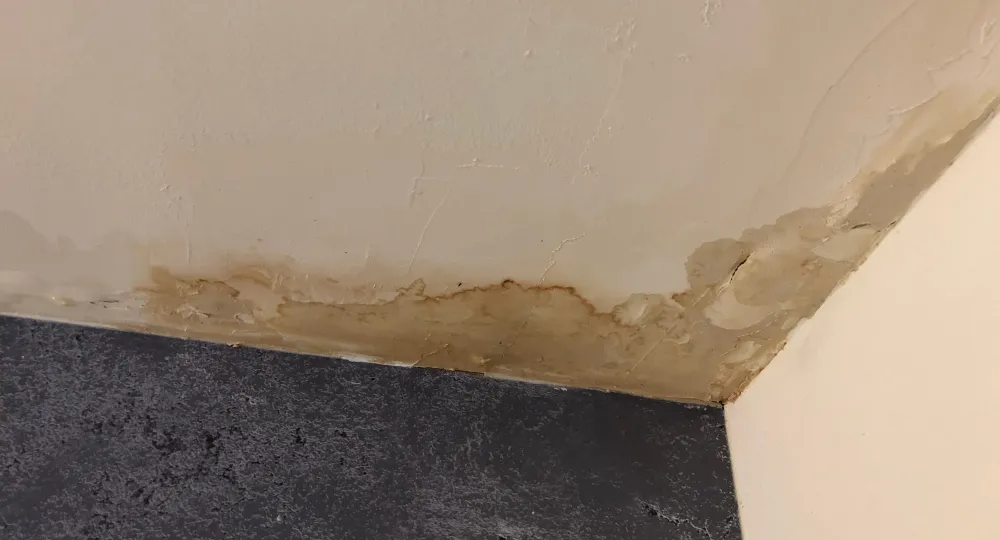
It might be, but it might not be. Water travels in unexpected ways inside walls and floors, so the leak’s source is often not directly above the wet spot. A plumber can trace the path of the water and pinpoint the real origin — which may be your unit, a neighboring unit, a shared pipe, or even the building’s plumbing system itself.
A homeowner in Vienna, VA recently called us with exactly this situation. Her downstairs neighbor was getting water in her unit and suspected it was coming from the bathroom above. But the caller had checked her own bathroom thoroughly and couldn’t find anything wrong. Sound familiar?
This is one of the most common and frustrating plumbing scenarios in multi-unit buildings. At Hicks Plumbing Services, we deal with inter-unit leak investigations regularly. Here is what you need to know.
Why Does Water Show Up Far From the Actual Leak?
Water follows gravity, but it also follows the path of least resistance through structural materials. It can travel along a joist, a pipe sleeve, or a concrete seam before it finally drips through a ceiling. That means a leak appearing in a first-floor bathroom could originate from a second-floor kitchen, a shared wall, or a building drain line that serves multiple units.
This is why you should not automatically assume guilt — and your neighbor should not either. The only way to know for sure is a professional inspection.
What Are the Most Likely Sources of an Inter-Unit Leak?
In multi-unit buildings, leaks between floors most often come from one of four places.
- Toilet wax ring failure: A worn or improperly seated wax ring can allow water to seep under the toilet base and into the subfloor without any visible puddle.
- Shower or tub pan liner: Grout cracks or a failed liner under the shower tile can let water migrate slowly over time — often without any obvious pooling on the surface.
- Supply line or shutoff valve: A slow drip behind the wall from a supply line is nearly invisible until it becomes a bigger problem.
- Shared drain stack: Buildings often share vertical drain pipes. A crack or blockage in that stack can cause water to back up or escape into adjacent units — and it has nothing to do with your bathroom habits.
Our team is experienced in tracing leaks through all of these scenarios. Learn more about our plumbing repair services and how we approach leak diagnostics.
What Should You Do Right Now If You Are in This Situation?
Do not wait for the problem to get worse or for your building management to sort it out on their own. Here are the steps we recommend:
- Do a visual check of your bathroom — look under the sink, around the base of the toilet, and along the walls of your shower for any moisture, discoloration, or soft spots.
- Check your water meter. If the dial is moving when all fixtures are off, you likely have an active leak somewhere.
- Notify your building manager or HOA in writing so there is a paper trail.
- Schedule a professional plumbing inspection. A free estimate gets a trained eye on the situation fast.
What Happens During a Leak Source Inspection in Vienna, VA?
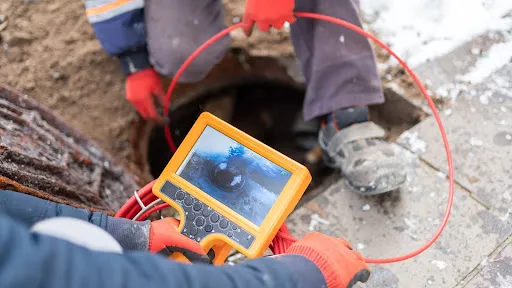
A plumber will systematically test each potential source to isolate where the water is entering the structure. This can include running water through specific fixtures one at a time, checking for moisture with a meter, and inspecting accessible pipe connections. In some cases, a camera inspection of the drain line is needed. The goal is to give you a clear answer, not a guess.
Want to know more about who we are and how we approach these inspections? Visit our about us page to learn about our team’s background and experience.
Does a plumber need access to both units to find the leak?
Not always, but it helps. If the plumber can inspect both the suspected source unit and the affected unit, they can cross-reference what they find and narrow things down much faster. If your neighbor is cooperative, try to coordinate access on the same day.
What if the leak is from a shared building pipe and not my unit?
If the leak originates from a common building system, the responsibility typically falls on the building owner or HOA rather than an individual tenant or unit owner. A written inspection report from a licensed plumber can help you make that case clearly.
Is it possible there is no leak at all from my unit?
Absolutely. Condensation, roof drainage issues, and HVAC drain lines are all sources of moisture that get mistakenly blamed on neighboring units. A thorough inspection rules these in or out so everyone has accurate information.
If you are dealing with this situation in Vienna, VA, do not let it drag on. Contact us today to schedule your free plumbing inspection. We will find out exactly where that water is coming from and give you a straight answer.